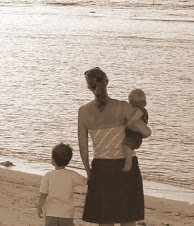
We've been in my hometown almost a week now. The weather has been gorgeous - so much nicer than way-too-hot-and-humid North Carolina or pollution-hazed Jakarta. Just lovely. And the evenings have been long and summery and fragrant.
I lived here for 11 years straight, between the ages of 5-16, and then on and off for another 7 years finishing high school and coming back while at college. My mother still lives in the house I grew up in, although the back half has been turned into student housing. But it still feels like home, and I guess it will always feel that way. I just can't imagine North Carolina, or DC, or anywhere ever feeling so deeply like home as it does here. I can't imagine it, but maybe once we've lived in one place for several years and we are entrenched in the boys' school and jobs, and surrounded by friends and routine, somewhere else could feel so much like home.
One of my favorite things to do here is to stroll through my childhood neighborhood in the evenings. No other neighborhood compares. There are old trees forming a canopy over the streets, a mixture of houses with different architecture styles and owner styles, sidewalks over flat land, chirping birds and hopping bunnies. And it is familiar and brings back wonderful memories of youth and care-free summer days and silly-girl chats.
On those walks I take a deep breath and can smell those days. There was so much giggling and friendships and insecurities, boy notes and homework and wide-open possibilities. It's funny to think of myself in those days, not knowing who I'd grow up to be or where I'd end up. I know I imagined exciting adventures across the oceans, but I never imagined the beaches and Hindu temples of Bali or sitting around with people I loved around a fire in Mali. I imagined being happily married with 2 children (although both not boys!), and for that I am so grateful. I am so grateful for it all. I think my little girl self would be very happy with the dreams her adult self has been able to realize.
Now, as I stroll the sidewalks I walked at some of the most significant stages of my life, my thoughts don't wander so much towards the dreams of my future. I suppose they are much more "adult" thoughts now centered on the present, focusing on the boys' needs, shopping lists, relationship matters, career decisions, family health issues, making new friends and beginning a new life chapter. And once again, as I find myself at a significant crossroads in my life, I am happy I have the good fortune to stroll those same lovely streets to help my mind work it all out.
Friday, July 15, 2011


Friday, July 1, 2011
Transitions
...are tough. Plain and simple, tough. Even when they're exciting, even when they're adventurous, even when they're joyful, they are also challenging, stressful, new, scary... And as much as you may be prepared for them, mentally and emotionally, there are still some rough waters as you swim to the other side.
We only left Jakarta two weeks ago, but in some ways it feels like an eternity. And even though most things are happening the way I expected, all this change and difference is still challenging. By all accounts our temporary apartment is great and comfortable, but it's still temporary and I'm still dying to get into our new house. We are lucky to already have a few friends here, but it is summer and they are busy and I am feeling a bit lonely. The boys have been pretty good considering the massive changes that are rocking their world, but they are with each other constantly and fighting heaps and driving me crazy. We were expecting our shipment from Jakarta to be delivered the end of July, but it now looks like it will be delivered the middle of August and just that two week difference is completely throwing off my schedule and my expectations.
So really, everything is going well and for the most part the way I expected and what I was prepared for. And yet. And yet it's still just - tough. And for this it is going as expected as well. I knew it would be tough. But it's still the getting through it. And I still want to complain. :)
The boys and I have been having fun rediscovering the area. I feel confident that we will be happy here and it will be an excellent place for the boys to grow up. Everyone is really nice. And that's saying a lot considering where we are coming from - a country rich in personal kindness! I suspected that being in a small town that is surrounded by two big cities would be a pretty ideal situation for me, and I still believe that to be true. It provides an intimacy and down-home feel that I grew up with in Wisconsin, but also supplies a diversity and cultural richness that I crave. The area may fall short in global understanding, but people have told me it does exist and is growing. I feel positive about our decision and once we are really settled, I hope we will know it was the right one.
For now I will endure the transition the best I can, continue to repeat my motto of the summer, 'it is what it is', and try to keep smiling.
We only left Jakarta two weeks ago, but in some ways it feels like an eternity. And even though most things are happening the way I expected, all this change and difference is still challenging. By all accounts our temporary apartment is great and comfortable, but it's still temporary and I'm still dying to get into our new house. We are lucky to already have a few friends here, but it is summer and they are busy and I am feeling a bit lonely. The boys have been pretty good considering the massive changes that are rocking their world, but they are with each other constantly and fighting heaps and driving me crazy. We were expecting our shipment from Jakarta to be delivered the end of July, but it now looks like it will be delivered the middle of August and just that two week difference is completely throwing off my schedule and my expectations.
So really, everything is going well and for the most part the way I expected and what I was prepared for. And yet. And yet it's still just - tough. And for this it is going as expected as well. I knew it would be tough. But it's still the getting through it. And I still want to complain. :)
The boys and I have been having fun rediscovering the area. I feel confident that we will be happy here and it will be an excellent place for the boys to grow up. Everyone is really nice. And that's saying a lot considering where we are coming from - a country rich in personal kindness! I suspected that being in a small town that is surrounded by two big cities would be a pretty ideal situation for me, and I still believe that to be true. It provides an intimacy and down-home feel that I grew up with in Wisconsin, but also supplies a diversity and cultural richness that I crave. The area may fall short in global understanding, but people have told me it does exist and is growing. I feel positive about our decision and once we are really settled, I hope we will know it was the right one.
For now I will endure the transition the best I can, continue to repeat my motto of the summer, 'it is what it is', and try to keep smiling.
Saturday, June 11, 2011
Happy number 11
Happy 11th Anniversary to my wonderful husband. For our fabulous adventures, for our beautiful boys, for loving me, thank you! I love you!


A mixed bag
It is a funny ride, this roller coaster of moving. Every day seems to reach new emotional highs and lows, new loves and hates, new levels of excitement and distress. We have known for months that we would be leaving Indonesia. We haven't always known where we were going, but we knew it was time for us to say selamat jalan to the country we have called home for 4.5 years. It wasn't an easy decision, but we always knew it would be one we would make eventually. Almost 5 years is long enough to live abroad, at least in a challenging city like Jakarta and so far from our real home.
A few months ago this city and this country were driving me nuts. Everything about it was wrong, nothing worked, it was all frustrating and stupid, it was dirty and smelly, etc. Fortunately at the time I recognized this for what it was - my brain's way of detaching myself emotionally from a place and from people I have loved. If you accept the approaching departure, you must look forward instead of dwelling on everything that has been and everything that is wonderful. And in order to do that, it seems to me that many people going through a major move deal with it by hating the place they have to leave. It makes sense to me, and is probably (hopefully!) a very healthy process. And I got to the other side of it - I still love it here, I still recognize the wonderful things about this place, I know I will miss it immensely. But I also recognize all that is horrible and all the things I am looking forward to bidding a fond farewell!
In this light, a review of what I find lovely about living in Jakarta and Indonesia, and all that I'm looking forward to in America.
What I will miss...
- Indonesians are incredibly kind and gentle
- There is never a dull day here
- The challenges of living in a foreign country push you continuously
- All the color and richness of this place that make it unique and interesting (for example, I have never tired of seeing the carts on the side of the road selling food or house essentials, or of people wearing batik clothing, etc)
- Hearing foreign languages all the time
- Always seeing people who look different from us, it's not a sea of white
- My lifestyle here has been luxurious, in so many ways
- Financial comfort
- Our house staff who takes care of us almost every day
- My free time
- Our ability to have our nanny work almost any night we ask, with short notice
- The spas!!! (massages, facials, reflexology, manis and pedis, etc)
- The relatively cheap and easy travel around Asia
- Tropical islands, adventure travel
- Swimming pool in our backyard
- Our wonderful, safe complex which has loads of kids and playgrounds
- Our good friends
- So much time to get to hang out with friends
- Jakarta International School
- Premier movie theaters (lazy boy recliner, blankets, meal service)
- Nice indoor playcenters
- Great Asian food
- Bali is only a 90 minute flight away
What I will not miss about Jakarta/Indonesia...
- The traffic! The motorcycles!
- The pollution!
- Too many people, everywhere
- Constantly getting sick, weird diseases
- The threat of Dengue fever
- Not being able to return things to stores
- Being surrounded by people who don't use critical thinking skills
- Lack of nice parks and places to go outside within Jakarta
- Having nice parks and beaches within 60 miles but that take hours to get to due to traffic
- The feeling that this life is not normal
- Being so far away physically from family and friends back home
- 12 hour time difference between here and home
- The 35 hours it takes to get home in the US
- The constant challenges - nothing is ever easy
- Rotating stock outs in the stores - you never know how long something will be available
- Having to go to several stores to find what you need
- Having to go to duty free stores for affordable wine and liquor, but these stores aren't always open and there is always a limit on how much you can buy
What I am looking forward to...
- Fresh air!
- Change of seasons
- The ease of living in the US
- No real traffic in Chapel Hill!
- You can find everything you need in just one store (OMG - Greatland Target I love you!)
- Seeing my family often, talking to them any time of day
- Road trips
- Staying in one place - making friends who most likely won't be moving away
- Owning a house and making it ours
- Driving. Driving on big wide roads without food carts, motorcycles, and too many cars crowding them
- Bike rides
- Hikes, camping
I thought I would write a list of what I'm not looking forward to about America, but I think I should end on a high note! Plus what I love about living here is pretty much the antithesis of what I don't like about the US.
We are one day into packing up our house. The house is more than half boxed and reality has set in with a huge shove forward! Definitely no turning back now!
A few months ago this city and this country were driving me nuts. Everything about it was wrong, nothing worked, it was all frustrating and stupid, it was dirty and smelly, etc. Fortunately at the time I recognized this for what it was - my brain's way of detaching myself emotionally from a place and from people I have loved. If you accept the approaching departure, you must look forward instead of dwelling on everything that has been and everything that is wonderful. And in order to do that, it seems to me that many people going through a major move deal with it by hating the place they have to leave. It makes sense to me, and is probably (hopefully!) a very healthy process. And I got to the other side of it - I still love it here, I still recognize the wonderful things about this place, I know I will miss it immensely. But I also recognize all that is horrible and all the things I am looking forward to bidding a fond farewell!
In this light, a review of what I find lovely about living in Jakarta and Indonesia, and all that I'm looking forward to in America.
What I will miss...
- Indonesians are incredibly kind and gentle
- There is never a dull day here
- The challenges of living in a foreign country push you continuously
- All the color and richness of this place that make it unique and interesting (for example, I have never tired of seeing the carts on the side of the road selling food or house essentials, or of people wearing batik clothing, etc)
- Hearing foreign languages all the time
- Always seeing people who look different from us, it's not a sea of white
- My lifestyle here has been luxurious, in so many ways
- Financial comfort
- Our house staff who takes care of us almost every day
- My free time
- Our ability to have our nanny work almost any night we ask, with short notice
- The spas!!! (massages, facials, reflexology, manis and pedis, etc)
- The relatively cheap and easy travel around Asia
- Tropical islands, adventure travel
- Swimming pool in our backyard
- Our wonderful, safe complex which has loads of kids and playgrounds
- Our good friends
- So much time to get to hang out with friends
- Jakarta International School
- Premier movie theaters (lazy boy recliner, blankets, meal service)
- Nice indoor playcenters
- Great Asian food
- Bali is only a 90 minute flight away
What I will not miss about Jakarta/Indonesia...
- The traffic! The motorcycles!
- The pollution!
- Too many people, everywhere
- Constantly getting sick, weird diseases
- The threat of Dengue fever
- Not being able to return things to stores
- Being surrounded by people who don't use critical thinking skills
- Lack of nice parks and places to go outside within Jakarta
- Having nice parks and beaches within 60 miles but that take hours to get to due to traffic
- The feeling that this life is not normal
- Being so far away physically from family and friends back home
- 12 hour time difference between here and home
- The 35 hours it takes to get home in the US
- The constant challenges - nothing is ever easy
- Rotating stock outs in the stores - you never know how long something will be available
- Having to go to several stores to find what you need
- Having to go to duty free stores for affordable wine and liquor, but these stores aren't always open and there is always a limit on how much you can buy
What I am looking forward to...
- Fresh air!
- Change of seasons
- The ease of living in the US
- No real traffic in Chapel Hill!
- You can find everything you need in just one store (OMG - Greatland Target I love you!)
- Seeing my family often, talking to them any time of day
- Road trips
- Staying in one place - making friends who most likely won't be moving away
- Owning a house and making it ours
- Driving. Driving on big wide roads without food carts, motorcycles, and too many cars crowding them
- Bike rides
- Hikes, camping
I thought I would write a list of what I'm not looking forward to about America, but I think I should end on a high note! Plus what I love about living here is pretty much the antithesis of what I don't like about the US.
We are one day into packing up our house. The house is more than half boxed and reality has set in with a huge shove forward! Definitely no turning back now!
Sunday, June 5, 2011
Home sweet home
J and I bought a house last month! We are now two weeks away from officially owning a home again, this time in Chapel Hill, North Carolina.
In 7 days I saw over 30 houses so I feel confident in our decision to purchase this house, although poor J flew in on a Thursday night, saw 6 of my top houses on Friday, and then we put in the offer on Saturday. For him it feels impulsive, but he is happy with the house too. In many ways it is a house I dream of owning. It is a house I will be happy to raise our children in. It is a house I can easily imagine sharing with dinner and house guests, full of laughter, kids running around, chinking wine glasses. The house looks like The American Dream.

The inside is contemporary, bright and airy. There is a beautiful screened porch opening off of the family room and I know those doors will be open at all possible times. The kitchen is also gorgeous, although I am worried about it being too small. And there are 6 bedrooms. I'm feeling a bit ridiculous saying that - our house has 6 bedrooms!?! And I am definitely worried about cleaning this large house! But it is beautiful, and we will have plenty of space to live in for many, many years to come.
The house is on a cul-de-sac on .25 acres. There is a beautiful backyard with a great jungle gym for the kids, and from what I hear there are lots of kids in the neighborhood. Our neighborhood is located adjacent to a large housing development that has several playgrounds, a community swimming pool, and a small town area with restaurants, grocery store, pediatrician offices, cafes, and boutiques which are all within walking distance of our house. I was hoping for exactly this and can't wait to walk over with the kids for coffee and treats!
We are excited. We are nervous. We are crazy stressed. We are anxious. We are curious. We are uncertain. We are expectant. We are hopeful.
The next two weeks will be absolutely insane! But at the end of it we will be back in the US and own a lovely new home!
In 7 days I saw over 30 houses so I feel confident in our decision to purchase this house, although poor J flew in on a Thursday night, saw 6 of my top houses on Friday, and then we put in the offer on Saturday. For him it feels impulsive, but he is happy with the house too. In many ways it is a house I dream of owning. It is a house I will be happy to raise our children in. It is a house I can easily imagine sharing with dinner and house guests, full of laughter, kids running around, chinking wine glasses. The house looks like The American Dream.
The inside is contemporary, bright and airy. There is a beautiful screened porch opening off of the family room and I know those doors will be open at all possible times. The kitchen is also gorgeous, although I am worried about it being too small. And there are 6 bedrooms. I'm feeling a bit ridiculous saying that - our house has 6 bedrooms!?! And I am definitely worried about cleaning this large house! But it is beautiful, and we will have plenty of space to live in for many, many years to come.
The house is on a cul-de-sac on .25 acres. There is a beautiful backyard with a great jungle gym for the kids, and from what I hear there are lots of kids in the neighborhood. Our neighborhood is located adjacent to a large housing development that has several playgrounds, a community swimming pool, and a small town area with restaurants, grocery store, pediatrician offices, cafes, and boutiques which are all within walking distance of our house. I was hoping for exactly this and can't wait to walk over with the kids for coffee and treats!
We are excited. We are nervous. We are crazy stressed. We are anxious. We are curious. We are uncertain. We are expectant. We are hopeful.
The next two weeks will be absolutely insane! But at the end of it we will be back in the US and own a lovely new home!
Saturday, April 16, 2011
Kool Kalimantan
As our time in Indonesia draws to a close, we are furiously trying to fit in all the last minute, must see trips before we leave Asia. A few weeks ago we went to Phuket, Thailand, which to be honest was a disappointment. I don't see what all the fuss is about. I love Thailand, but I'd much rather go back to Koh Samui for a beautiful beach vacation or go to Chang Mai.
This past weekend, however, we went on a fabulous and comfortably adventurous trip to central Kalimantan! By Indonesian standards it was an expensive trip, but it was well worth all those millions of rupiahs! The flight from Jakarta to Palangkaraya was only 1.5 hours, and aside from the Lion Air pilot once again landing us hard upon touch down (seems to be a trend with Lion Air...), it was an easy get away from Jakarta. We went Thursday night and stayed at the Luwansa Hotel so that we would already be there Friday morning to get on the boat. The Luwansa Hotel was surprisingly nice - a very clean, comfortable and decent place to spend one short night.
The next morning we were picked up a bit late from the hotel (car problems they said) but then arrived a short 15-20 minutes later at the port which I assume was in the old part of town. We were greeted at once by an Indonesian woman speaking perfect English - Aini - and were welcomed on a gorgeous wooden house boat called the Rahai'i Pangun. We were taken to our comfortable cabins and shown a map of our route which would take us up the Rungan River past 3 orangutan reserves. As soon as the other tourists (an American couple living in Jakarta) arrived we shipped out! We drank coffee and ate some Indonesian snacks as we floated by the busy river life of Palangkaraya.


We spent the next four hours or so slowly making our way up the river, passing a few small villages in the midst of miles of jungle. At one point we asked how isolated a certain village was, as it seemed to us we were in the middle of nowhere. Much to our surprise we were just 15 km from Palangkaraya by road! So while our whole river cruise felt very "adventurous" and "isolated", surrounded by what felt like miles and miles of jungle and small river ways, it turns out we were never more than 50 minutes from Palangkaraya! During our whole 2 day trip; however, we never passed another boat full of tourists, and were instead treated to fishermen in small canoes, small villages full of waving children, quiet river jungle and mangrove forests, and of course orangutans!
The orangutan reserves are managed by the Borneo Orangutan Survival Foundation (BOSF), which is an organization that has been rescuing orangutans from illegal captivity or loss of habitat since 1991. Their mission is to Rescue, Rehabilitate, and Release orangutans from around Borneo. The reserves that we visited are where the orangutans are being rehabilitated - learning to fend for themselves in a safe jungle environment. Most of the orangutans were rescued from captivity where they most likely lived since they were young, so they never learned how to live in the jungle. BOSF teaches them how to do that, first at "Forest School" and then later at these reservations. We visited the Nyaru Menteng location in Central Kalimantan.
After a delicious lunch on the boat we soon arrived at our first orangutan island. Straight away we spotted a few orangutans up in the trees, and all of us crowded to the back of the boat to get the best view. We stopped nearby and readied ourselves to get in canoes in order to get closer to the orangutans and then continue on a canoe trip through the smaller river ways. The big boat wasn't allowed to get too close to the island, but canoes can get closer so we all piled ourselves into the canoes and were paddled the short distance to the island.
At one point there were about 4 orangutans on the ground near the shore, where the feeding spot was located. They were gorgeous! Even the boys had their eyes glued to them, as I continuously experimented with my camera trying to get "national geographic shots" in low light, with a telephoto lens, balancing on a rocky canoe! I took over 350 photos over 2 days, and fortunately I believe I managed a few good ones.


Once our appetite for Orangutan gazing was satisfied we took off on our canoe ride. What we thought was to be a short ride through the small water ways turned into a 2 hour long voyage. By the time we found our big boat dusk was well upon us and the rain clouds were threatening. The first hour of the trip was lovely though - cruising through jungle encroached river tributaries, mangrove forests and black water lakes (from the peat of the soil). It was completely quiet except for some bird and insect chatter, and the only hint of civilization we saw was a few fishermen shacks.
As can only happen in a 2 hour long canoe ride, our 4 year old grew restless and began the constant barrage of "when are we there...?? (whine whine) where is our boat...?? (whine whine)". We did the best we could with LC while J and I simultaneously mouthed to each other "oh my aching back...! (whine whine) oh my sore butt...! (whine whine) where is our boat...?? (whine whine)". As the sun went down and the clouds grew darker I must admit to a creeping fear as well - what if our canoe capsized here in the middle of nowhere?! The thought hadn't crossed my mind until everything grew more ominous with the approaching night. Finally, we spotted the boat and we all cheered - our guide was also very happy to have finally arrived! Evidently there was a gold mining platform blocking the way that our big boat wanted to take to meet us, so it had to go farther up river than originally planned. We had made it safely, with just an aching back and bum to complain of, and with beautiful scenery to remember.


Our first night we parked near the side of the river, enjoyed another delicious meal, and listened to the rain overhead. Thankfully we tucked in early to bed as the jungle and our own little monkeys woke us up at 5:30 the next morning. We had a lazy morning as the boat paddled up to a larger village where we picked up another few passengers. We then headed to a second orangutan island and once again enjoyed watching them eat and swing from the branches.
After lunch we headed to a dayak village where we were entertained with a welcoming dance and music by some of the village children. After a little while LC got bored and wandered off towards some other kids and started making friends. He and C were definitely big hits in the village and were basically treated like rock stars. I'm sure they don't have many foreign kids visiting their village and they were a novelty. But they had fun and we enjoyed learning a bit about dayak culture and about life in the village.


After we left the village the boat found a spot to park for the night and we were treated to another great meal and stayed up a while chatting with our boat mates. We went to bed early again as we knew it would be another early morning and we had to get off the boat to catch our flight back to Jakarta.
In the morning we realized they had parked us right beside another orangutan island, and were delighted that we got to see another couple orangutans before leaving Kalimantan. We were happy we were able to see a mom with her baby at the first island, and then were able to see another one in the morning before leaving.

All in all it was a really great trip - easy flight out of Jakarta and everything was so well organized. Plus the boat was very nice, the food was great, the guide was very informative, and best of all we saw some amazing orangutans in Kalimantan!
This past weekend, however, we went on a fabulous and comfortably adventurous trip to central Kalimantan! By Indonesian standards it was an expensive trip, but it was well worth all those millions of rupiahs! The flight from Jakarta to Palangkaraya was only 1.5 hours, and aside from the Lion Air pilot once again landing us hard upon touch down (seems to be a trend with Lion Air...), it was an easy get away from Jakarta. We went Thursday night and stayed at the Luwansa Hotel so that we would already be there Friday morning to get on the boat. The Luwansa Hotel was surprisingly nice - a very clean, comfortable and decent place to spend one short night.
The next morning we were picked up a bit late from the hotel (car problems they said) but then arrived a short 15-20 minutes later at the port which I assume was in the old part of town. We were greeted at once by an Indonesian woman speaking perfect English - Aini - and were welcomed on a gorgeous wooden house boat called the Rahai'i Pangun. We were taken to our comfortable cabins and shown a map of our route which would take us up the Rungan River past 3 orangutan reserves. As soon as the other tourists (an American couple living in Jakarta) arrived we shipped out! We drank coffee and ate some Indonesian snacks as we floated by the busy river life of Palangkaraya.


We spent the next four hours or so slowly making our way up the river, passing a few small villages in the midst of miles of jungle. At one point we asked how isolated a certain village was, as it seemed to us we were in the middle of nowhere. Much to our surprise we were just 15 km from Palangkaraya by road! So while our whole river cruise felt very "adventurous" and "isolated", surrounded by what felt like miles and miles of jungle and small river ways, it turns out we were never more than 50 minutes from Palangkaraya! During our whole 2 day trip; however, we never passed another boat full of tourists, and were instead treated to fishermen in small canoes, small villages full of waving children, quiet river jungle and mangrove forests, and of course orangutans!
The orangutan reserves are managed by the Borneo Orangutan Survival Foundation (BOSF), which is an organization that has been rescuing orangutans from illegal captivity or loss of habitat since 1991. Their mission is to Rescue, Rehabilitate, and Release orangutans from around Borneo. The reserves that we visited are where the orangutans are being rehabilitated - learning to fend for themselves in a safe jungle environment. Most of the orangutans were rescued from captivity where they most likely lived since they were young, so they never learned how to live in the jungle. BOSF teaches them how to do that, first at "Forest School" and then later at these reservations. We visited the Nyaru Menteng location in Central Kalimantan.
After a delicious lunch on the boat we soon arrived at our first orangutan island. Straight away we spotted a few orangutans up in the trees, and all of us crowded to the back of the boat to get the best view. We stopped nearby and readied ourselves to get in canoes in order to get closer to the orangutans and then continue on a canoe trip through the smaller river ways. The big boat wasn't allowed to get too close to the island, but canoes can get closer so we all piled ourselves into the canoes and were paddled the short distance to the island.
At one point there were about 4 orangutans on the ground near the shore, where the feeding spot was located. They were gorgeous! Even the boys had their eyes glued to them, as I continuously experimented with my camera trying to get "national geographic shots" in low light, with a telephoto lens, balancing on a rocky canoe! I took over 350 photos over 2 days, and fortunately I believe I managed a few good ones.


Once our appetite for Orangutan gazing was satisfied we took off on our canoe ride. What we thought was to be a short ride through the small water ways turned into a 2 hour long voyage. By the time we found our big boat dusk was well upon us and the rain clouds were threatening. The first hour of the trip was lovely though - cruising through jungle encroached river tributaries, mangrove forests and black water lakes (from the peat of the soil). It was completely quiet except for some bird and insect chatter, and the only hint of civilization we saw was a few fishermen shacks.
As can only happen in a 2 hour long canoe ride, our 4 year old grew restless and began the constant barrage of "when are we there...?? (whine whine) where is our boat...?? (whine whine)". We did the best we could with LC while J and I simultaneously mouthed to each other "oh my aching back...! (whine whine) oh my sore butt...! (whine whine) where is our boat...?? (whine whine)". As the sun went down and the clouds grew darker I must admit to a creeping fear as well - what if our canoe capsized here in the middle of nowhere?! The thought hadn't crossed my mind until everything grew more ominous with the approaching night. Finally, we spotted the boat and we all cheered - our guide was also very happy to have finally arrived! Evidently there was a gold mining platform blocking the way that our big boat wanted to take to meet us, so it had to go farther up river than originally planned. We had made it safely, with just an aching back and bum to complain of, and with beautiful scenery to remember.


Our first night we parked near the side of the river, enjoyed another delicious meal, and listened to the rain overhead. Thankfully we tucked in early to bed as the jungle and our own little monkeys woke us up at 5:30 the next morning. We had a lazy morning as the boat paddled up to a larger village where we picked up another few passengers. We then headed to a second orangutan island and once again enjoyed watching them eat and swing from the branches.
After lunch we headed to a dayak village where we were entertained with a welcoming dance and music by some of the village children. After a little while LC got bored and wandered off towards some other kids and started making friends. He and C were definitely big hits in the village and were basically treated like rock stars. I'm sure they don't have many foreign kids visiting their village and they were a novelty. But they had fun and we enjoyed learning a bit about dayak culture and about life in the village.


After we left the village the boat found a spot to park for the night and we were treated to another great meal and stayed up a while chatting with our boat mates. We went to bed early again as we knew it would be another early morning and we had to get off the boat to catch our flight back to Jakarta.
In the morning we realized they had parked us right beside another orangutan island, and were delighted that we got to see another couple orangutans before leaving Kalimantan. We were happy we were able to see a mom with her baby at the first island, and then were able to see another one in the morning before leaving.

All in all it was a really great trip - easy flight out of Jakarta and everything was so well organized. Plus the boat was very nice, the food was great, the guide was very informative, and best of all we saw some amazing orangutans in Kalimantan!
Monday, March 28, 2011
A foodie I'm not, but just the same
Here is a post that I started last year, and just now finished. If you're feeling adventurous in the kitchen, here are some good recipes to try!
I realize that I've been remiss in writing very much on Indonesian culture, as most of the time I blog I am writing about a trip we took or about the boys. Both are worthwhile I think, but I'm sure you, kind reader, would also like to learn more about Indonesia! So with that, I am going to write about food, since so much of our lives (for good or bad) and our cultures are wrapped up in food. Now those of you who know me know that I am not a 'foodie' - I am not 'into' food, I do not like to cook, and there are many meals I'd prefer to just be able to inject into my body rather than sit down for. However, I do appreciate a good meal and recognize what a significant role it plays in a country's culture.
Indonesia is such a vast country and is made up of so many different peoples, that its food also varies depending on the region. There are Javanese dishes, Manodonese, Balinese, Sumatran, etc. and while all are typically Indonesian (meaning they share many qualities and are very different from say Mexican, Italian, Indian, Japanese, etc.) they also differ enough that many Indonesians can tell where a particular dish is from within Indonesia by simply looking at it or with a quick taste. For a very good explanation of Indonesian food, please visit this link. One significant difference is what sort of meat is used because most Indonesians are Muslim and so do not cook with pork. Bali on the other hand, being a mostly Hindu island, freely uses pork in many dishes as well as duck which is very popular (a well known and delicious Balinese dish is called Bebek Betutu). Regional dishes also differ on the amount and kind of chiles they use. In general Indonesians like some heat in their dishes (they also love sweet and fried foods), but the Manadonese are known for their extremely spicey dishes. I am sorry to say I'm a bit of a chile wimp, and so I've never tried Manadonese food, but this is what I've heard.
We are fortunate to be living in a foreign country whose food is delicious (NOT the case when we lived in W. Africa). My favorite dish is called Nasi Kuning (yellow rice) and Tempeh (a variant of tofu) Orek. It is a fairly common dish in Java but usually prepared for celebrations. The nasi kuning is made with tumeric, lemongrass and coconut milk, so it has a nice, but subtle flavor. The tempeh orek on the other hand is fabulously flavorful - a wonderful mixture of sweet, salty, and spicey. It is sprinkled on top of the rice dish and the balance of flavors is divine.
Another popular dish, which I believe is found everywhere in Indonesia, is nasi goreng or mie goreng, which is simply fried rice or fried noodles. Most restaurants or cooks will add in ingredients to make nasi/mie goreng more interesting, such as carrots, shrimp, chicken or beef, chilies, peanuts, or egg. It is a basic dish that is difficult to mess up, and since it is fried it is one of the safest dishes to order in even the most basic of eateries.
I love a good peanut sauce, which I quickly grew to appreciate in Mali as it was one of the few appealing dishes among their traditional food. Because Mali is so poor, too often the peanut sauce, called tigadigana, is watered down. However, if you stumble upon a good tigadigana, it is heavenly. I looked on the internet for recipes but only found tigedigena recipes on blog sites - I suppose that isn't surprising. This recipe looks good, although I've never heard of adding broccoli to tigedigena. I don't remember ever even seeing broccoli in the whole country! Here is another recipe for tigadigana, along with a wonderful description of just how awful the food in Mali can be. But I, like this blog author, learned to appreciate what you learn from forcing down food you don't love - the simple fact that you have food to eat to keep you from starving, the quiet beauty of eating with people - whether they be friends or strangers, the importance of kindness in smiling at your hosts despite your discomfort, etc. (But I have led us on a tangent...) You can also find great peanut sauces in Indonesia, for example to accompany gado gado, which is cooked and raw vegetables dipped in peanut sauce, or satay, which is any grilled meat on skewers, but most often chicken or beef, covered in peanut sauce. Both are often served with krupuk, which are similar to shrimp crackers.
Another delicious and popular Indonesian dish is rendang, usually beef rendang, which is beef cooked in coconut milk and spices such as ginger, turmeric leaf, lemongrass and chilies. Many Indonesian curry dishes are incorrectly called rendang, for true rendang requires hours of cooking whereby the liquid sauce is cooked down to a paste, or disappears completely to make a dry beef rendang. Because of the long cooking time required, it isn't common to find true rendang in restaurants. But when you do, it is well worth it! Here is a good looking beef rendang recipe (I haven't tried it). Like I said, it's a long process so perhaps it's best to try on a cold rainy Saturday or Sunday!
I would be remiss if I didn't talk about sambal, which is Indonesia's basic chili sauce. You will find it in the grocery stores in the ketchup aisle and it is always served in restaurants along with the ketchup (fortunately it is a lighter red color so I don't confuse them too often!). It has a nice flavor and adds some heat, if needed. Hand made sambal is even better though, with more texture and richer flavors. While my husband still contends that I can't handle any spice, I beg to differ and think that living in Indonesia has heightened my tolerance for spicy hot foods and has taught me how to enjoy its flavor.
Indonesian food is flavorful and exotic and delicious, so give it a try if you haven't before! Here's hoping we find a good Indonesian restaurant in the Triangle!
I realize that I've been remiss in writing very much on Indonesian culture, as most of the time I blog I am writing about a trip we took or about the boys. Both are worthwhile I think, but I'm sure you, kind reader, would also like to learn more about Indonesia! So with that, I am going to write about food, since so much of our lives (for good or bad) and our cultures are wrapped up in food. Now those of you who know me know that I am not a 'foodie' - I am not 'into' food, I do not like to cook, and there are many meals I'd prefer to just be able to inject into my body rather than sit down for. However, I do appreciate a good meal and recognize what a significant role it plays in a country's culture.
Indonesia is such a vast country and is made up of so many different peoples, that its food also varies depending on the region. There are Javanese dishes, Manodonese, Balinese, Sumatran, etc. and while all are typically Indonesian (meaning they share many qualities and are very different from say Mexican, Italian, Indian, Japanese, etc.) they also differ enough that many Indonesians can tell where a particular dish is from within Indonesia by simply looking at it or with a quick taste. For a very good explanation of Indonesian food, please visit this link. One significant difference is what sort of meat is used because most Indonesians are Muslim and so do not cook with pork. Bali on the other hand, being a mostly Hindu island, freely uses pork in many dishes as well as duck which is very popular (a well known and delicious Balinese dish is called Bebek Betutu). Regional dishes also differ on the amount and kind of chiles they use. In general Indonesians like some heat in their dishes (they also love sweet and fried foods), but the Manadonese are known for their extremely spicey dishes. I am sorry to say I'm a bit of a chile wimp, and so I've never tried Manadonese food, but this is what I've heard.
We are fortunate to be living in a foreign country whose food is delicious (NOT the case when we lived in W. Africa). My favorite dish is called Nasi Kuning (yellow rice) and Tempeh (a variant of tofu) Orek. It is a fairly common dish in Java but usually prepared for celebrations. The nasi kuning is made with tumeric, lemongrass and coconut milk, so it has a nice, but subtle flavor. The tempeh orek on the other hand is fabulously flavorful - a wonderful mixture of sweet, salty, and spicey. It is sprinkled on top of the rice dish and the balance of flavors is divine.
Another popular dish, which I believe is found everywhere in Indonesia, is nasi goreng or mie goreng, which is simply fried rice or fried noodles. Most restaurants or cooks will add in ingredients to make nasi/mie goreng more interesting, such as carrots, shrimp, chicken or beef, chilies, peanuts, or egg. It is a basic dish that is difficult to mess up, and since it is fried it is one of the safest dishes to order in even the most basic of eateries.
I love a good peanut sauce, which I quickly grew to appreciate in Mali as it was one of the few appealing dishes among their traditional food. Because Mali is so poor, too often the peanut sauce, called tigadigana, is watered down. However, if you stumble upon a good tigadigana, it is heavenly. I looked on the internet for recipes but only found tigedigena recipes on blog sites - I suppose that isn't surprising. This recipe looks good, although I've never heard of adding broccoli to tigedigena. I don't remember ever even seeing broccoli in the whole country! Here is another recipe for tigadigana, along with a wonderful description of just how awful the food in Mali can be. But I, like this blog author, learned to appreciate what you learn from forcing down food you don't love - the simple fact that you have food to eat to keep you from starving, the quiet beauty of eating with people - whether they be friends or strangers, the importance of kindness in smiling at your hosts despite your discomfort, etc. (But I have led us on a tangent...) You can also find great peanut sauces in Indonesia, for example to accompany gado gado, which is cooked and raw vegetables dipped in peanut sauce, or satay, which is any grilled meat on skewers, but most often chicken or beef, covered in peanut sauce. Both are often served with krupuk, which are similar to shrimp crackers.
Another delicious and popular Indonesian dish is rendang, usually beef rendang, which is beef cooked in coconut milk and spices such as ginger, turmeric leaf, lemongrass and chilies. Many Indonesian curry dishes are incorrectly called rendang, for true rendang requires hours of cooking whereby the liquid sauce is cooked down to a paste, or disappears completely to make a dry beef rendang. Because of the long cooking time required, it isn't common to find true rendang in restaurants. But when you do, it is well worth it! Here is a good looking beef rendang recipe (I haven't tried it). Like I said, it's a long process so perhaps it's best to try on a cold rainy Saturday or Sunday!
I would be remiss if I didn't talk about sambal, which is Indonesia's basic chili sauce. You will find it in the grocery stores in the ketchup aisle and it is always served in restaurants along with the ketchup (fortunately it is a lighter red color so I don't confuse them too often!). It has a nice flavor and adds some heat, if needed. Hand made sambal is even better though, with more texture and richer flavors. While my husband still contends that I can't handle any spice, I beg to differ and think that living in Indonesia has heightened my tolerance for spicy hot foods and has taught me how to enjoy its flavor.
Indonesian food is flavorful and exotic and delicious, so give it a try if you haven't before! Here's hoping we find a good Indonesian restaurant in the Triangle!
Subscribe to:
Posts (Atom)